
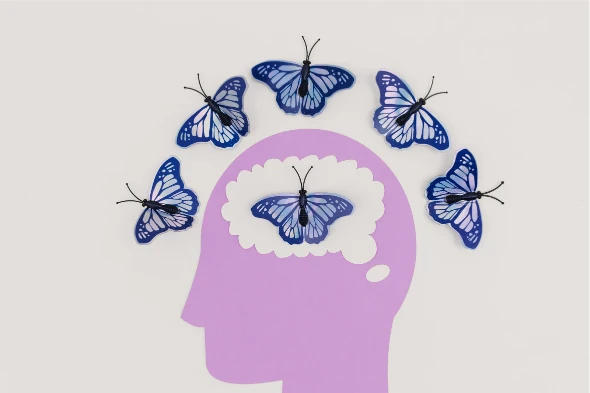
Memory Aids: Exploring the Science Behind Them
Memory aids are habits that make learning and recall easier by giving your brain better cues to form memories. These cues help you retrieve information more readily at some point in the future. Memory aids, such as mnemonics and chunking, are fairly common. Others are simple routines, such as spaced repetition, healthy sleep, and regular movement. But let’s be curious about what happens when memory aids actually work.
What memory aids really do to your brain (simple science of recall)
Memory serves three purposes: encoding (providing a way to place new information into your brain), storage (holding onto that information), and retrieval (accessing the information when you need it). Most frustration occurs during retrieval. You “know” it, but it is still beyond your reach.
A major player here is the hippocampus, a structure that helps form new memories and tie them to contexts such as space and time. Along the line, your brain strengthens these connections. This means that retrieval isn’t just faster but also requires less effort (see this open-access overview on associative recognition and repetition: https://ncbi.nlm.nih.gov/pmc/articles/PMC6050388/).
Memory aids work because they:
- Create retrieval cues (extra “handles” to hold onto later).
- Minimize the stuff you must carry in your mind as you build (you’re less likely to drop pieces).
- Train the pathways not with brute force but through spaced-out practice.
Why cues and patterns outperform “just trying harder”
Think of your brain not as a filing cabinet but more like a web. When one strand is pulled, the others move in response. This explains why patterns feel “sticky”. They create a number of roads back to the same fact for your brain.
A cue can be an image, a phrase, or perhaps a place. This is important because recall is often context-dependent. Any specific cue that is more likely to elicit an emotional response may also be more effective.
Spaced repetition: how timing rewires long-term memory
Spaced repetition is reviewing the material at intervals rather than repeating it over and over again in a single session. It may feel as though cramming works and boosts your performance, but the benefit you get from cramming is temporary.
Spacing works for the same reason your brain might think it doesn’t: it has to work harder to retrieve those memories. That effort fortifies the memory as you get there. Spaced practice helps us remember things better over time. It involves studying material with breaks in between and works in many learning settings. For more info, read the review “Spaced Repetition Promotes Efficient and Effective Learning” here: https://journals.sagepub.com/doi/abs/10.1177/2372732215624708.

Here is a simple timetable that you can borrow:
- Review today, then tomorrow, and then three days later.
- Keep it light. Everything gears toward small challenges and frequent success.
The most proven memory aids, and when to use each one
Recalling the names of various parts of the anatomy, giving a speech, and memorizing a telephone number do not all fall in the same category. The most efficient memory aids align with how your brain stores each type of information. People may remember something they heard, but visual information is usually more reliable.
Mnemonics, acronyms, and chunking (make info easier to hold)
Working memory is a sort of desk. You can’t think clearly if you cover it with too many sticky notes. Chunking clears the desk by grouping pieces of information into meaningful units.
Think of phone numbers, for instance. It can be challenging to remember 10 distinct digits. The same principle applies to steps in a process, protocols, and many other things we learn.
Mnemonics and acronyms serve much the same function. They pack a lot of information into a single signal or word. “ROYGBIV” is a common example used for the hues of the rainbow. You can also make your own acronyms by taking the first letters of a few things and running with them.
Good Use Cases:
- Short listings (errands, talking points, steps to take).
- Numbers and codes.
- Categories you want to remember in sequence.
Visualization and the method of loci (memory palace) for fast recall
Words may be slippery, but pictures frequently are not. This is because your brain is good at processing imagery and space, and those systems are easy to use. The technique of using familiar places as storage hooks is known as the method of loci. You mentally “place” items along a familiar route and retrieve them later.
Here is a quick example for a grocery list:
- Doorway: An enormous carton of milk obstructing your way.
- Hallway: Eggs stacked like bowling balls.
- Kitchen sink: Bananas floating in soapy water.
- Bedroom: A loaf of bread serving as your pillow.
It’s kind of silly, which is part of why it works. Strange visual depictions catch the eye and become strong cues.
There is some firm evidence that mnemonic training with the method of loci can enhance memory and alter how the brain deals with encoding (one well-known paper is “Durable memories and efficient neural coding through mnemonic training using the method of loci”: https://www.science.org/doi/10.1126/sciadv.abc7606).
Good Use Cases:
- Speeches and presentations.
- Ordered lists, such as steps or timelines.
- “On-the-spot” recall under stress.
Make memory aids work better: sleep, exercise, novelty, and smart practice
Methods are the tools; your way of life is the toolkit. Sleep and movement aren’t substitutes for studying, but they can help ensure that the time you spend studying pays off. Think of learning as taking pictures. Memory aids allow you to frame the shot. Recovery and sleep help your brain save it to the album.
Sleep is your brain’s save button (consolidation and replay)
Sleep is essential for consolidation, the process of stabilizing what you have learned. If you shortchange your sleep, you will not only feel tired but may also struggle to remember what you studied.
Recent work also demonstrates that sleep may improve memory for sequences of real-world events (see: “Sleep selectively and durably enhances memory for the sequence of real-world experiences”: https://www.nature.com/articles/s41562-025-02117-5?error=cookies\_not\_supported&code=edf13c4c-eadb-406f-b55a-d3aee810e8d6).

A simple plan that’s realistic for most people:
- Aim for seven to nine hours when you can.
- Study earlier, then complete a quick review closer to bedtime.
- Skip all-nighters; spread your learning over days and weeks instead.
Exercise and “one new thing a day” to strengthen memory pathways
Regular movement supports the brain, mood, and attention. Even a little activity everyday can help you feel energized and alert. In addition, novelty helps because your brain notices when you do something new. This stimulates various areas of your brain (see: “New experiences enhance learning by resetting key brain circuit”:https://www.nih.gov/news-events/news-releases/new-experiences-enhance-learning-resetting-key-brain-circuit).
Three Low-Effort Ideas:
- Walk for 10 minutes after you study.
- Learn five new words in a language app.
- Cook and eat a new recipe.
These aren’t magic tricks, they’re gentle pushes that get your brain seeking to learn more.
Conclusion
Memory aids aren’t cheats. They work, at least in part, because they amplify signals, lessen cognitive strain, and enhance memory. Interleaving study sessions with sleep is important for memory consolidation, helping us retain what we have learned. Simple practices, such as spaced repetition and learning new skills, create and strengthen important neural pathways. These are just a few methods you can use to keep your ideas alive for years to come.
Knowing the benefits of using memory aids is one thing, but actually making the switch and reaping those rewards is yet another. Good news: we’re here to help.
Join our newsletter
Product Benefits You Can Expect
Enhanced Cognitive Performance
This award winning formula has been precisely created to help improve memory, focus and overall mental performance.

Supports Brain Health
Focuses on consistent cognitive support, making it suited for people seeking lasting brain-health improvements.

Scientifically-Backed Ingredients
Bacopa Monnieri and Ginkgo Biloba, along with other ingredients, include well-studied elements that come highly commended.
Here’s what our customers say
How it works
Step 01: Choose Your Plan
Pick the best Advanced Memory Formula plan for yourself. Choose a one-time purchase or a multi-pack option.
Step 02: Place Your Order
Complete your purchase now for a fast delivery directly to your door.
Step 03: Experience the Benefits
Begin taking Advanced Memory Formula daily and enjoy better memory, increased focus, and overall cognitive health.
Here’s What You’ll Get
Scientifically-Backed Ingredients: Enriched with ingredients such as Bacopa Monnieri, Phosphatidylserine, Luteolin and Blueberry, this formula is designed to boost mental performance and improve memory.
Supports Mental Clarity: Formulated to improve focus and mental sharpness, it helps you remain alert and able to be present during work, school or other tasks.
Aids Memory Recall: Users report markedly better memory for names and information. It’s really helpful for anyone worried about forgetting important things.
Protects Brain Health: Natural ingredients to fight against cognitive decline and keep the mind agile.
No Artificial Additives: No harmful preservatives or cheap unnecessary fillers, so you can feel good about supporting your brain.
User Satisfaction Guaranteed: It is backed with 100% satisfied or fully refunded guarantee, making this product completely risk-free and the best choice for you to take care of your brain.